New Year Special: Exploring the charms of Kawasaki Daishi
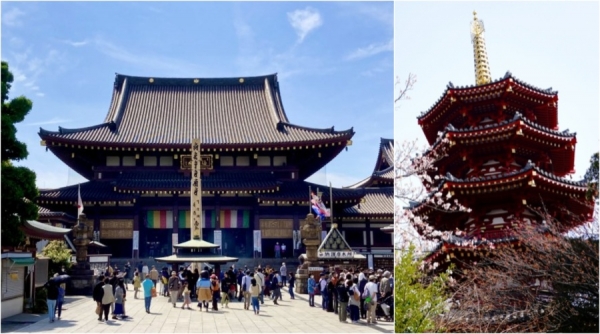
Planning to visit a temple outside of Tokyo over the New Year celebrations? Kawasaki Daishi (川崎大師) could be your top pick. Perfectly located, easily accessible, brimming with local charm, and boasting an awe-inspiring presence, this temple is a combination of grandeur and beauty. It's huge, stunning, and truly majestic – a must-visit!
Kawasaki Daishi, officially known as Heiken-ji (平間寺), is a prominent Buddhist temple located in Kawasaki City (川崎市 Kawasaki-shi), Kanagawa Prefecture (神奈川県 Kanagawa-ken). With a rich history dating back over 890 years, this sacred site is a testament to Japan's cultural and religious heritage.
History of Kawasaki Daishi Heiken-ji
(Image credit: photoAC)
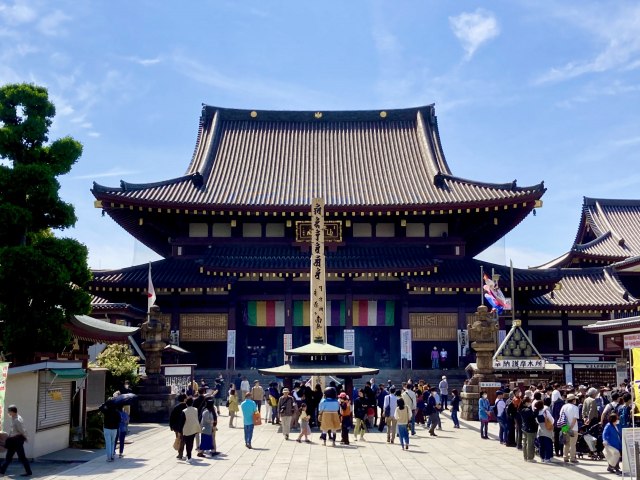
This temple belongs to the Chisan School of Shingon Buddhism and is renowned for its ability to ward off evil. The main temple of this school is Chishakuin in Higashiyama Shichijo, Kyoto. Alongside Naritasan Shinshoji Temple in Narita City, Chiba, and Takao-san Yakuo-in Yuki-ji Temple in Hachioji City, Tokyo, Kawasaki Daishi stands as one of the largest temples within the Chisan School of Shingon Buddhism.
Founded in 1128AD, Kawasaki Daishi is dedicated to Kobo Daishi (弘法大師), also known as Kukai (空海), a revered Buddhist monk who played a pivotal role in introducing esoteric Buddhism to Japan. The temple has undergone several renovations over the centuries, and its current main hall, the Dai Hondo (大本堂), was reconstructed in the 17th century, showcasing impressive architecture and intricate details.
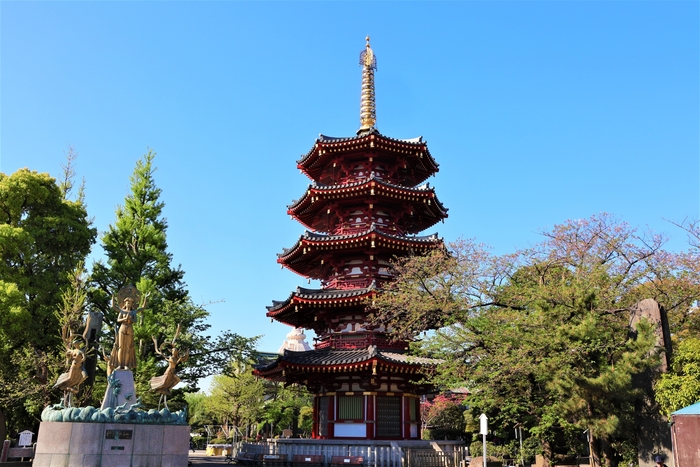
Hakkaku Gojunoto (Octagonal Five-Storied Pagoda). (Image credit: photoAC)
An interesting thing about Kawasaki Daishi is its association with the Shikoku 88 Temple Pilgrimage (四国88箇所), as it is considered the starting point for this sacred journey. Pilgrims visit Kawasaki Daishi before embarking on the rigorous pilgrimage in Shikoku Island, seeking spiritual enlightenment and blessings.
Famously called Yakuyoke Odaishi-sama (厄除け大師) for warding off evil, Kawasaki Daishi also conducts the Gomakitou (護摩祈祷 rite of burning) daily to seek pray for the fulfilment of one's wishes, encompassing purification, household peace, business prosperity, and overall well-being. This ritual involves offerings to the sacred fire, symbolising the burning away of obstacles and impurities.
Temple Grounds
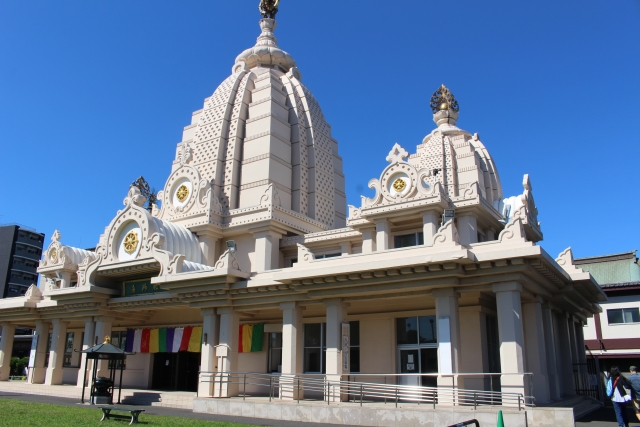
The Jidosha Kotsuanzen Kito. (Image credit: photoAC)
Kawasaki Daishi boasts a captivating array of halls and buildings, each contributing to the temple's cultural and spiritual significance. There is the Dai-Sanmon (大山門 Main Gate) which greets all visitors who are visiting the main hall. Statues of the Four Heavenly Kings, guardians of the four compass directions rest on the gate. Two distinctive features of the temple is the Fudo-do (不動堂) is said to protect people who seek protection from evil spirits while the Jidosha Kotsuanzen Kito (自動車交通安全祈祷 Prayer Hall for Safe Driving) has the outward appearance of an Indian temple-styled architecture and is said to be used to pray for safety of automobile drivers and passengers.
In addition to its religious and cultural importance, Kawasaki Daishi offers a serene escape from the bustling urban life. The temple's well-maintained gardens and peaceful surroundings create a tranquil atmosphere, inviting visitors to reflect and find solace.
A popular spot for New Year celebrations
(Image credit: childs view / CC BY-NC 2.0 DEED)
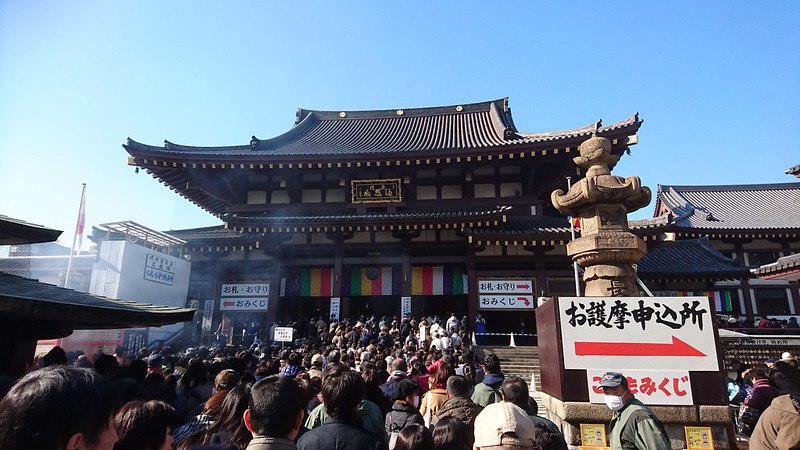
Kawasaki Daishi is a popular destination for Japanese people making their hatsumode (初詣), or first visit of the year, to a Shinto shrine or Buddhist temple. As the New Year unfolds, many flock to this revered temple, seeking blessings and good fortune, with events and festivities beginning from the last week of December to the first week of January. The air buzzes with prayers, creating a vibrant atmosphere. With colourful decorations and joyful rituals, Kawasaki Daishi sets the stage for a meaningful start to the New Year, inviting all to partake in this cherished cultural experience.
The celebrations actually begin on the last festival day of the year and is known as the Osamefuda Otakiage Horaku (納め札お焚き上げ法楽). It is the burning of talismans and omamori (お守り charms) on the last festival day of the year to honour them for protecting people throughout the year. As the clock strikes midnight on New Year's Eve and Joya no Kane (長夜の金) resonates, the inaugural rite of burning of the year unfolds at Kawasaki Daishi. Numerous New Year's visitors converge to seek enhanced purification and blessings for the upcoming year through heartfelt prayers and participation in this sacred ritual.
(Image credit: photoAC)
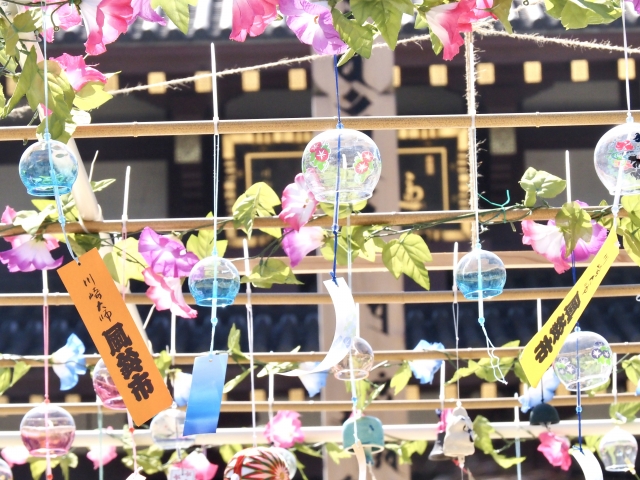
In addition to the New Year celebration, Kawasaki Daishi is also home to plenty of other festivals such as the bean-scattering festival Mamemakishiki (豆まき式) on Setsubun Day in February, and the Wind Bell Market, Kawasaki Daishi Furin-Ichi (川崎大師風鈴市) in July.
Shopping at Nakamise-dori
(Image credit: photoAC)
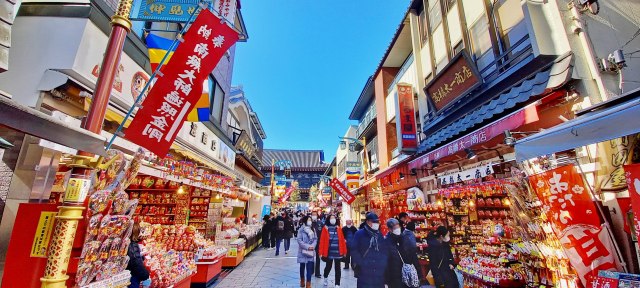
Nakamise-dori (仲見世通り) is the main street located just in front of the main gate of Kawasaki Daishi. This street is lined with shops and stalls selling various souvenirs and specialty items. The street, echoing the nostalgic Showa Era, is reminiscent of similar lively avenues near prominent shrines and temples across Japan. The bustling Nakamise shops trade a variety of goods, including Japanese sweets like kuzumochi and warabimochi, noodles, pickles as well as items like Daruma dolls. It is also the perfect place to pick out a souvenir or omiyage (お土産) to bring home!
Getting there
(Image credit: photoAC)
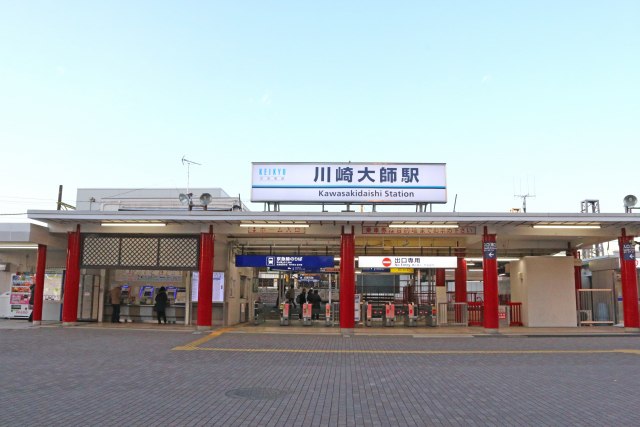
Kawasaki Daishi is located along the Keikyu Daishi Line (京急大師線 Keikyū Daishi-sen), a short line that branches off the Keikyu Main Line (京急本線 Keikyū hon-sen) at Keikyu Kawasaki Station (京急川崎駅 Keikyū Kawasaki-eki). The train ride between Keikyu Kawasaki and Kawasaki Daishi stations takes about 5 minutes with frequent departures, making the temple an accessible and popular destination for locals and travellers alike.
This grand temple stands as a testament to Japan's rich religious heritage, offering a blend of history, spirituality, and cultural experiences. Whether seeking blessings, participating in rituals, or simply enjoying the serene ambiance, a visit to Kawasaki Daishi—particularly during the New Year celebrations—provides a meaningful connection to Japan's profound spiritual traditions.
Kawasaki Daishi Heikenji Temple (川崎大師平間寺)
Address: 4-48 Daisahi-cho, Kawasaki-ku, Kawasaki-shi, Kanagawa 210-8521
Nearest station: Kawasaki-daishi Station (川崎大師駅)
Access: 8-minute walk from the station
TEL: +81 44-266-3420
Header image credit: photoAC
Related Articles: